
AI, data and software development, in plain language and in depth
Practical articles on artificial intelligence, AI agents, programming, DevOps and reliable development. Pick a topic or search for a specific technology.
API pricing
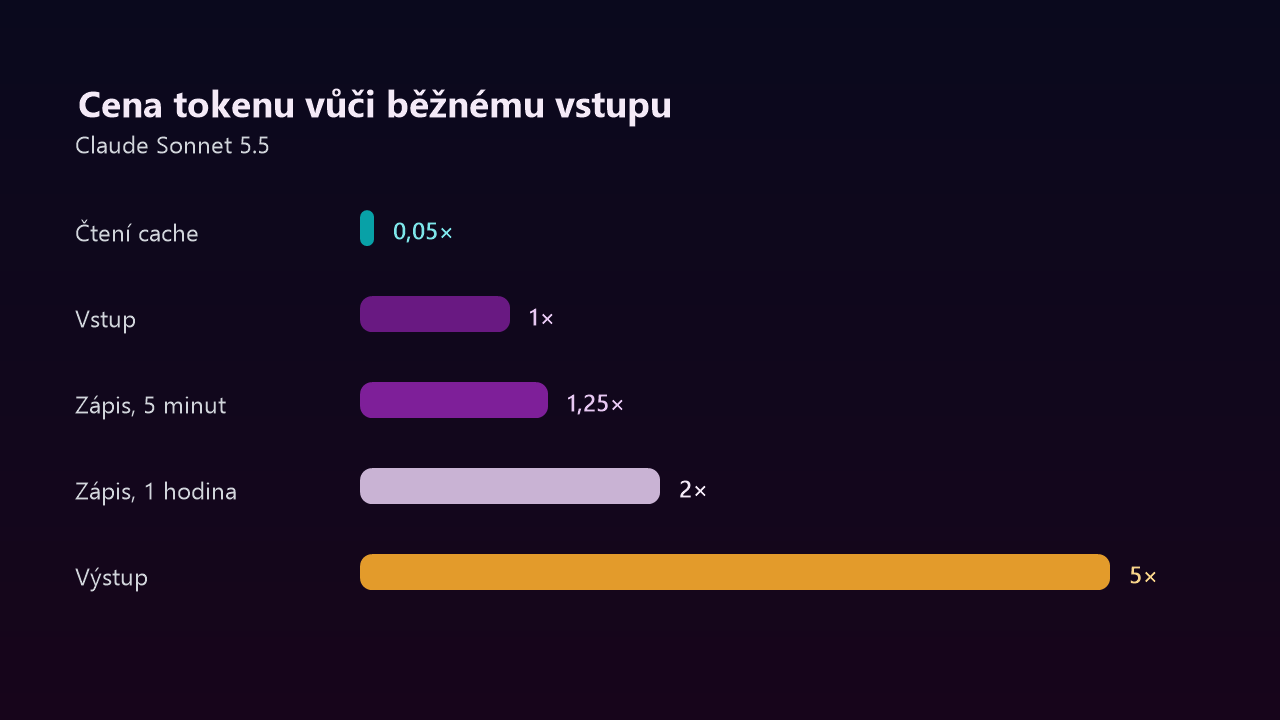
Token types: input, output, cache and price
Input, output, cache, reasoning and embedding. What each token type is for and why the same million can cost cents or tens of dollars.

Nemotron
Nemotron: NVIDIA's open AI models
Nemotron is NVIDIA's family of open models. Nano, Super, Ultra and Lightning: when to use them, how to read 30B-A3B and how they differ from Llama.

AI model names
AI model names: 70B, MoE and Q4_K_M
What do 7B, 70B, MoE, Instruct and Q4_K_M mean in AI model names? A practical guide to choosing by memory, format and use case.

Benchmark manipulation
When AI wins a benchmark: progress or marketing trick?
How are benchmarks of AI models and agents skewed? Learn about unequal conditions, cherry-picking, reward hacking and the cases of Llama 4, Gemini and o3.

Agent evaluation
How to read AI agent comparisons: what the metrics and five percent mean
Resolve rate, pass@k, time horizon and Elo. What each metric measures for AI agents and when a five-percent difference means real progress — and when just noise.

Embeddings and vectors
What is an embedding: how AI turns meaning into numbers
What an embedding is, how it turns text into vectors and why it is the foundation of semantic search, recommendations, vector databases and RAG.

RAG architectures
Types of RAG: from basic retrieval to GraphRAG and AI agents
What types of RAG exist? A comparison of Naive, Advanced, Modular, Graph, Agentic, Self, Corrective and multimodal RAG, including practical selection.
Databases
What is a relational database and SQL: an explanation for beginners
What is a relational database, how do tables, keys and relationships work and what is SQL for? A clear guide with your first queries step by step.

Getting started
How to start programming from scratch: a practical 30-day plan
Want to start programming from scratch? Pick your first language, set up your environment and build your own project step by step in 30 days.

AI infrastructure
Kong AI Gateway: what it does and when to use it for AI agents
What Kong AI Gateway is, how it governs AI agents' access to models, MCP tools and other agents, and when to choose LiteLLM, Portkey or Envoy instead.

Infrastructure
How to host AI agents on AWS: Lambda, Fargate or AgentCore?
How to deploy an AI agent on AWS? We compare Lambda, ECS Fargate and AgentCore and show secure operation, scaling and cost control.

AI in development
Why learning to program is still worth it in the age of AI and vibe coding
AI and vibe coding have not abolished programming — they shifted the value to judgement, control and precise specification. Studies show why the fundamentals of code still matter.

LLMs in depth
Reasoning models: what really happens when a model “thinks”
Hidden reasoning tokens, test-time compute, verifiers and faithfulness without anthropomorphising. When longer computation helps, when a model talks itself out of the right answer and how to route the reasoning budget.

LLMs in depth
Mixture of Experts: why a model with 671 billion parameters uses only 37
What “only X billion active parameters” means: how the router picks experts, why experts specialise in tokens rather than topics — and why an MoE model needs memory for the whole but runs at the speed of a slice.

History of AI
7 people who advanced artificial intelligence the most
From the Turing machine to AlphaFold: Turing, McCarthy, Hinton, LeCun, Fei-Fei Li, the Transformer team and Hassabis. What exactly they achieved, why it was a technical breakthrough and how their discoveries build on each other.

Infrastructure
LLM gateway and MCP gateway: two gates for enterprise AI
Prompts go to models, actions go to tools — and a gateway sits above both flows. An LLM gateway handles a unified API, budgets, fallbacks and caching; an MCP gateway handles the tool catalogue, secrets, interceptors against prompt injection and an audit of every call.

Practice
Git and GitHub for beginners: what they are for and how to upload your first project
Git is a time machine for your code, GitHub is its home on the internet. In plain language: what both tools do, why they are useful even for self-learners — and a step-by-step guide to uploading your first sample project.
AI agents
What is a graph database and how AI agents use it
Property graphs, Cypher and index-free adjacency in depth — and three ways graphs serve agents: text2Cypher, GraphRAG with communities and temporal graph memory that knows how to forget properly.

AI agents
What is a vector database and how AI agents use it
Embeddings, cosine similarity and the HNSW index explained clearly. A comparison of Qdrant, pgvector and Pinecone — and above all the two roles a vector database plays for agents: a knowledge base for RAG and long-term memory.

Infrastructure
Kubernetes for developers: how container orchestration works
The declarative model, the reconciliation loop, cluster architecture and the path from Pod to Deployment. Practical examples with kubectl, health probes, autoscaling — and, honestly, when you don't need Kubernetes.

AI agents
What is an AI agent and how does it actually work?
You hear the word “agent” everywhere these days. Under the surface, though, lies a surprisingly simple principle: a loop in which a language model thinks, calls tools and evaluates the results. We break it down step by step, including a code example.

LLMs in depth
The U-curve in LLMs: why models get lost in the middle of the context
Large language models do not read context evenly. They remember information at the beginning and end of a prompt very well, but “lose” it in the middle. What is behind it and how to work with it in practice — from prompts to RAG.

AI in development
Benchmarks for coding assistants: what SWE-bench and co. actually measure
HumanEval, SWE-bench Verified and Pro, LiveCodeBench, Aider Polyglot, Terminal-Bench — what exactly they measure, which leaderboards carry weight and why the same model scores 25 points differently on two variants of the same benchmark.

LLMs in depth
LLM hallucinations: what studies say about why models lie
Confident but false answers are not a mysterious malfunction — studies show they are statistically inevitable and that benchmarks directly reward them. Why hallucinations arise, how they relate to context and how to measure and suppress them.

Practice
How to host open-source LLMs: from Ollama to Kubernetes
Your own language model — for data privacy, cost and independence. We cover model selection, quantisation, required VRAM, the tools Ollama, llama.cpp and vLLM, GPU clouds and scaling on Kubernetes.